How to Write a Mystery: Build the Twist, Motive and Clues from the Solution
Good mystery story ideas take shape when you decide the answer (the truth) first and then work out how to hide it. This guide to how to write a mystery shows how to choose what to hide, build a twist on the reader's assumptions, find a motive that feels right, and plant clues readers see but don't notice, while building one small everyday mystery set in a photo studio.
Key takeaways
- Build a mystery idea by deciding the solution before the puzzle, in the reverse of the reading order
- A twist starts with choosing which part of the truth to hide: who, how, why, or what really happened
- The seeds of concealment are reader assumptions about time, people, places and roles (the photo studio example hides only the "why" and uses an assumption about roles)
- Build the motive from something the character wants to protect, so readers feel "for that person, there was no other choice"
- Show every clue needed for the solution before the reveal, and make each one easy to overlook by giving it another explanation
How to write a mystery: decide the "answer" first
You can build mystery story ideas by deciding the answer (the truth) first and then working out how to hide it. If you only come up with a puzzle, like "someone vanished from a locked room," you cannot decide the clues or the culprit's movements while the answer is still missing.
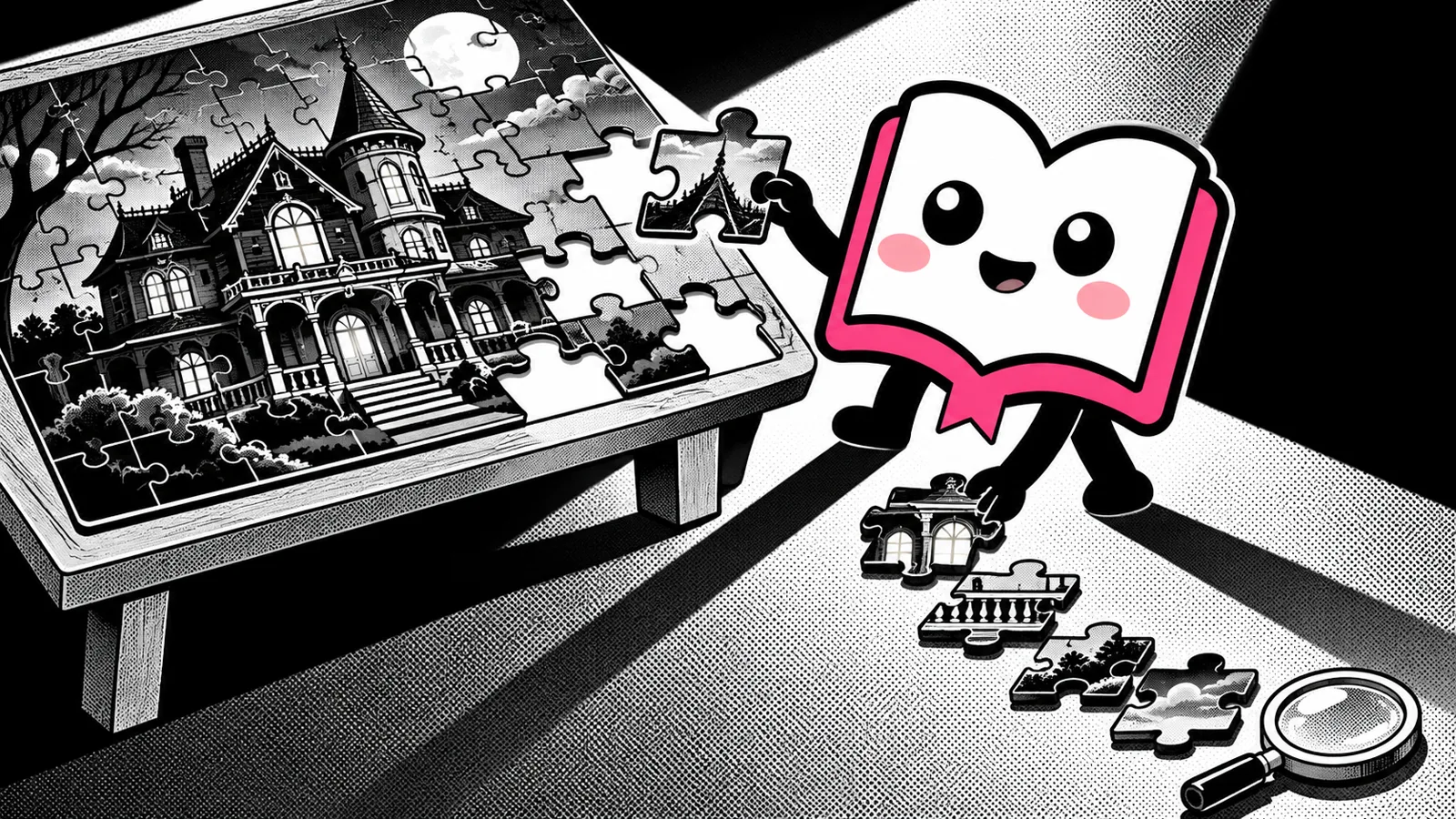
Only the person who buried the treasure can draw the treasure map. Readers move in the order "puzzle → clues → truth," but writers build in reverse: "truth → concealment → clues → the puzzle shown first."
From here, we will go through the four stages in Figure 1 one at a time, including how to decide the motive. Along the way we will build one small mystery idea, and at the end we will turn it into six steps you can use for your own ideas.
A twist starts with choosing one thing to hide
The word "trick" tends to suggest an elaborate mechanism. But at the idea stage, all you need to decide is which part of the truth to hide from the reader. The part you hide changes the question the reader asks.
- Who: Who is the culprit? The well-known form called a "Whodunit"
- How: How did they get out of a locked room, or how could they be there at that time? (Howdunit)
- Why: We know who did it, but not why they would do such a thing (Whydunit)
- What really happened: Was it even a crime? Who benefited? The meaning of what happened gets turned upside down
For your first story, we recommend narrowing it down to one thing to hide. If you hide "who," "how" and "why" all at once, the explanation at the final reveal gets long and readers are left behind.
One more thing: a mystery can be written without anyone dying. Stories that solve small "that's odd" moments from daily life, such as a lost item, a notice that has been swapped, or a mysterious letter that arrives every week, are called "everyday mysteries" (a term from Japanese mystery writing, "nichijo no nazo"), and they are easy to write even without any knowledge of crime.
Mystery plot twist ideas come from the reader's assumptions
Once you have decided what to hide, the next step is how to hide it. What helps here is what people normally believe without checking. A twist often places the real answer exactly where the reader thinks "well, obviously." Assumptions are easier to find if you sort them into four broad types.
| Type of assumption | What the reader believes | Example idea |
|---|---|---|
| Time | The time shown on clocks and records is correct | The security camera footage was recorded on the same day last year |
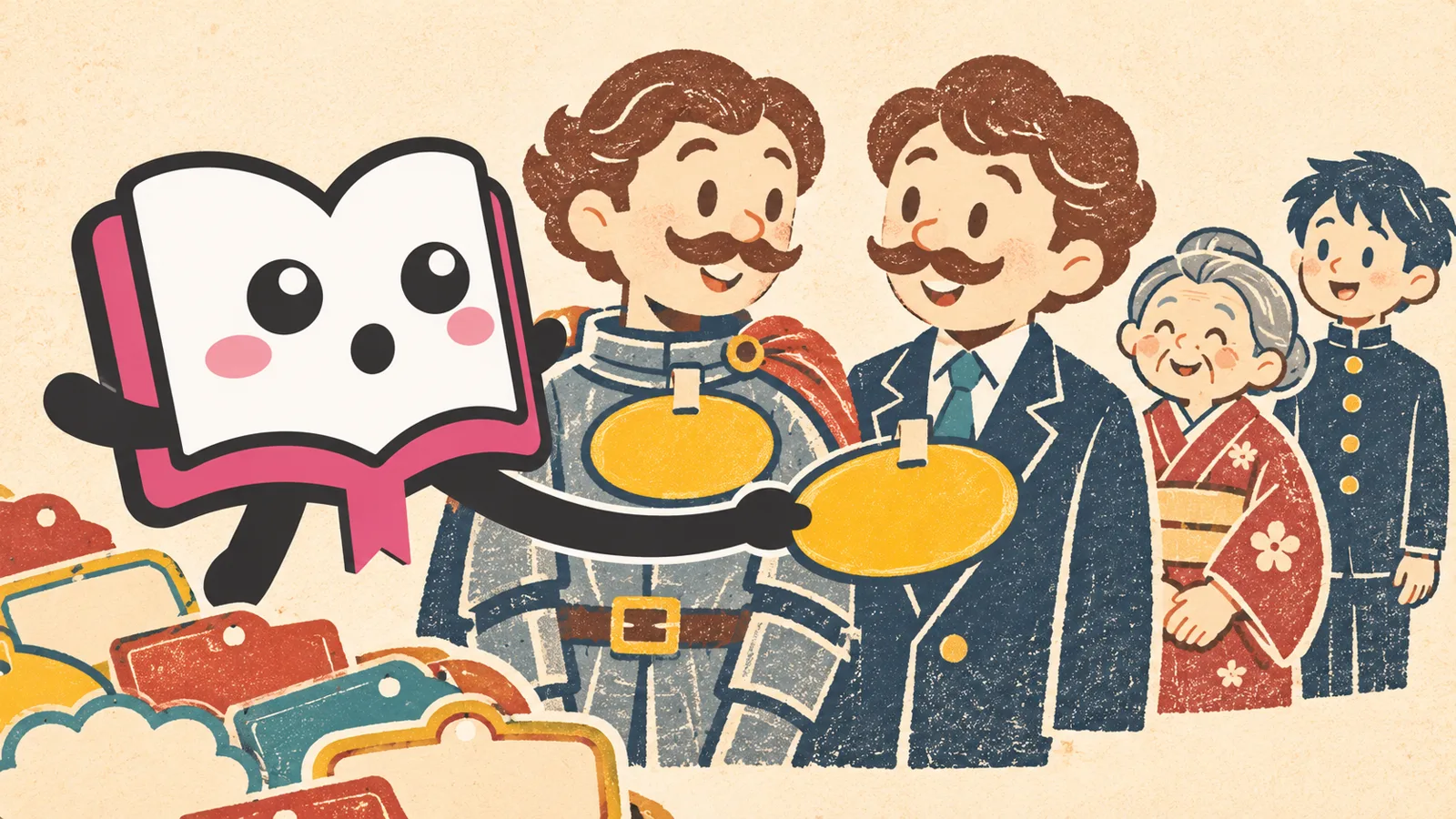
| People | Same name, same clothes, same voice means the same person | The person everyone called "Teacher" was actually two different people |
| Place | Each room or shop in the story exists only once | There was an identical room one floor up |
| Role | People who look angry, troubled or surprised are on the side they appear to be on | The person who seemed most surprised had set it all up |
When looking for ideas, pick one item from the left column of the table and search your own surroundings for "things you believe without checking": the time of your morning train, the names your family uses for each other, the identical units in your apartment building. The more familiar something is, the more readers believe it too, and the bigger the surprise when you flip it.
You do not need specialist knowledge of poisons, medicine or mechanical devices at the idea stage. Use one assumption well, and even a small mechanism becomes a twist.
The motive: a reason that makes readers feel "for that person, there was no other choice"
When deciding the truth, the motive matters as much as the trick. What stays with readers after they finish is often not how clever the mechanism was, but "why did that person do it?"
If the motive is weak, even a brilliant trick leaves readers thinking "would anyone really go that far?" On the other hand, if the motive is so strong that it stands out from the start, the answer becomes obvious right away. The sweet spot is a reason readers would not think of beforehand, but once told, accept with "for that person, there was no other choice".
Motives like that are easier to find if you build them not from big reasons like money or revenge, but from something the person wants to protect: a family secret, a promise, pride in their work, a regret they cannot tell anyone. Try writing down "what is this person most afraid of losing?" and the reasons behind their actions will connect naturally.
Example: building the photo studio window mystery from the truth
Let's build one idea using the approach so far. It is an everyday mystery where no one dies, and the only thing hidden is the "why." Who did it is shown to the reader from the start.
The truth: A photo studio on a local shopping street displays a photo of a family's daughter taken for Shichi-Go-San (a Japanese festival celebrating children at ages three, five and seven, often marked with a formal portrait). The studio owner, with his own hands, swapped that photo for one taken at the same studio 30 years ago. It shows the girl's mother at her own Shichi-Go-San. The mother's mother, the girl's grandmother, has recently found it hard to recognize the faces of newer family members, and she looks forward to seeing this window from the bus every morning. She can still recognize her daughter's face from 30 years ago. The swap was something the mother had asked the owner to do.
The puzzle shown first: One morning, the owner takes down the new photo on display and replaces it with a faded old one. The narrator, a high school student working part-time at the studio, asks why, but the owner only says, "I was asked to."
The assumption used here is about "role." The day before, the student saw the mother of the family in the photo crying at the studio. Readers assume "there must have been a family dispute over the photo," but the mother was not the angry party. She was the one who asked.
Place clues where they are "shown but not noticed"
Once the truth and the way of hiding it are decided, place the clues. The rule to keep here is to show the reader every clue needed to see the truth before the reveal. If the case is solved with a clue that appears for the first time at the very end, readers feel cheated.
There is an old guideline for this idea. In 1928, the American writer S. S. Van Dine published "Twenty Rules for Writing Detective Stories" in a magazine, and in the first rule he wrote that the reader should have the same opportunity as the detective to solve the mystery. The following year, in 1929, the British writer Ronald Knox also set out ten rules (known as "Knox's Ten Commandments"), including one saying that any clue the detective finds should be shown to the reader right away. Both reflect the views of writers from about 100 years ago, and they are not rules that today's works must follow. Still, the core idea of competing with the reader on the same clues remains a good guide when building mystery ideas.
To show clues and still keep them from being noticed, you can place them like this.
- Show it with another explanation: Attach a plausible alternative explanation to the action that serves as the clue
- Place it next to something eye-catching: Slip it quietly into a scene where the reader's attention is on a dramatic event
- Mix in one false clue: A clue that leads to a different answer. But reveal the reason for it at the end too
In the photo studio example, there are three real clues. First, a description of the bus stopping at a red light in front of the studio a little after 8 every morning (slipped in as part of the school-commute scenery). Second, the owner has been searching for a box of old negatives (film) since the week before (he says it is "year-end tidying"). Third, as the mother leaves, she looks at the timetable at the bus stop in front of the studio. The false clue is the mother crying at the studio. In fact she was crying while talking about the grandmother, but readers are pulled toward the different answer "the family had a dispute."
When you have placed all the clues, reread from the beginning as if you did not know the truth. If a single clue gives the answer away, strengthen the concealment; if the answer is still unclear with every clue in hand, make one of them easier to read.
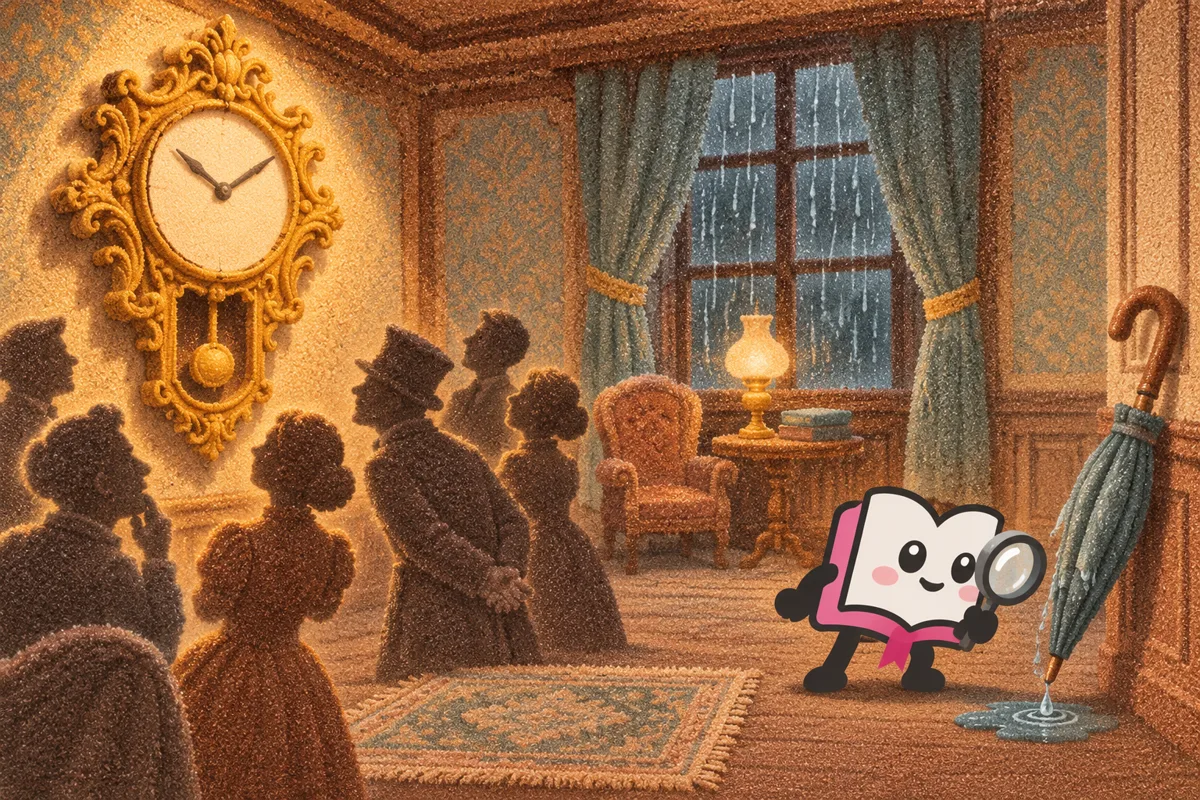
Recap: the order for building a mystery idea
Rearranged in order, the flow we followed in the photo studio example looks like this: the four stages from Figure 1, plus choosing what to hide and the motive, for six steps in all. When building your own idea, fill in one line at a time in this order, and the puzzle and the answer will not contradict each other.
- Decide the truth in one sentence (who did what, and why)
- Choose one part of the truth to hide (who, how, why, or what really happened)
- Decide which assumption to use for hiding it (time, people, place, role)
- Shape the motive so readers feel "for that person, there was no other choice"
- Place the real clues before the reveal, plus one false clue
- Finally, decide the puzzle you show the reader first
Precisely because you decide it last, the opening puzzle ends up connected to the truth. If you create the puzzle first, you tend to pile on forced details later just to make the answer fit.
There is one more caution when writing a story that hides "who." Among the story requests submitted to Original Novel (November 6–7, 2026), of the 5 that chose a "type of twist," 3 chose "the mastermind is an unexpected person." The numbers are small, so treat this only as a rough guide, but if you make an unexpected person the culprit, they need to appear early in the story with an ordinary face. Someone who first appears at the very end is not unexpected; they are just "a stranger."
Have AI play the "reader" to test whether it can be solved
It is hard to tell on your own whether you have too many clues or too few. Because you know the truth, every clue jumps out at you. So give an AI such as ChatGPT, Claude or Gemini only a summary with the truth hidden, and ask it to work out the solution.
You are a reader of mystery novels. Read only the "puzzle summary" below and try to solve it.

[Puzzle summary]
The puzzle shown first: ...
Characters: ... (one line each)
Scenes where clues appear: ... / ... / ...
(The truth is not included yet)

[Please answer]
1. Your answer and your reasoning
2. Scenes or clues that caught your attention (most noticeable first)
3. What you felt was missing to decide on an answer

After hearing your reasoning, I will tell you the truth.
If anything about the truth feels like cheating, tell me which scene, by name.
If the AI guesses the truth on the first try, your clues are too strong. If it says it cannot think of any answer, you are short on clues or false clues. AI reasoning is not the same as a human reader's, so use its answers only as a rough guide and make the final call yourself.
Forgotten clues and inconsistent names or times become more likely the longer the story gets. On this site too, AI checks each chapter for contradictions with earlier chapters and mistakes in names and numbers before it is published (as of November 2026).
Write Chapter 1 with the mystery you built
Once the six steps are filled in, start by writing just Chapter 1. For Chapter 1, the puzzle shown first and just one of the real clues are enough. Even if you do not write all the way to the truth, once you have written the entrance to the mystery, you can move forward in the order of the clues.
Reading one mystery by someone else before you write also helps. Of the 55 stories published on Original Novel, 12 are mysteries (as of November 14, 2026; a single story can count toward several genres). When you finish one, go back to the beginning and check what other explanation each real clue was hidden behind. It will serve as a model the next time you write your own.
Read stories with a mystery
See more: Read stories with a mystery ›Mystery and crime stories written by AI on this site. Try reading them while looking for where the clues are hidden.

 Completed
Sources (date checked)
- Twenty Rules for Writing Detective StoriesS. S. Van Dine, American Magazine, Sept. 1928 (copy posted by Frank Grady, University of Missouri-St. Louis) / Checked Nov 18, 2026
- Ronald A. Knox's Detective Story DecalogueRonald A. Knox (copy posted by Frank Grady, University of Missouri-St. Louis) / Checked Nov 18, 2026
FAQ
What is the difference between mystery and suspense?
Generally, "mystery" often refers to a story where the reader works out a hidden truth together with the characters, while "suspense" refers to a story driven by tension over an approaching danger. In suspense, the reader may know the culprit or the danger in advance. There is no strict dividing line, and many works offer both pleasures.
What is the difference between foreshadowing and clues?
Foreshadowing covers any early hint that connects to later events. Clues are the subset that serve as material for solving the mystery. In a mystery, showing the reader every clue needed to see the truth before the reveal is what makes the story fair.
What if my twist turns out to be similar to another work?
The idea of using assumptions is common to many works, so it is not unusual for the skeleton of a trick to be similar. What matters is not copying how scenes or sentences are written, and creating your own characters, motive and setting. With a different motive and different characters, the same skeleton reads as a completely different story.
How should I write the reveal scene?
Retrace the clues in the order they appeared, and name the scenes so readers can recall "so that's what that moment meant." Instead of relying only on a long explanation from the detective, include the culprit's side of the story or a scene showing the motive, and the explanation of the trick becomes the climax of the story. Do not introduce new clues here.