How to Name Characters in a Novel: Names Readers Never Mix Up, Plus Popular Names by Era
A character name works when readers can say it without stumbling, never confuse it with another character's, and believe it fits the time and place the character was born. This guide on how to name characters works backward from the moments where names trip readers up, then gives you lists of popular names by era and an AI prompt for generating candidates.
Key takeaways
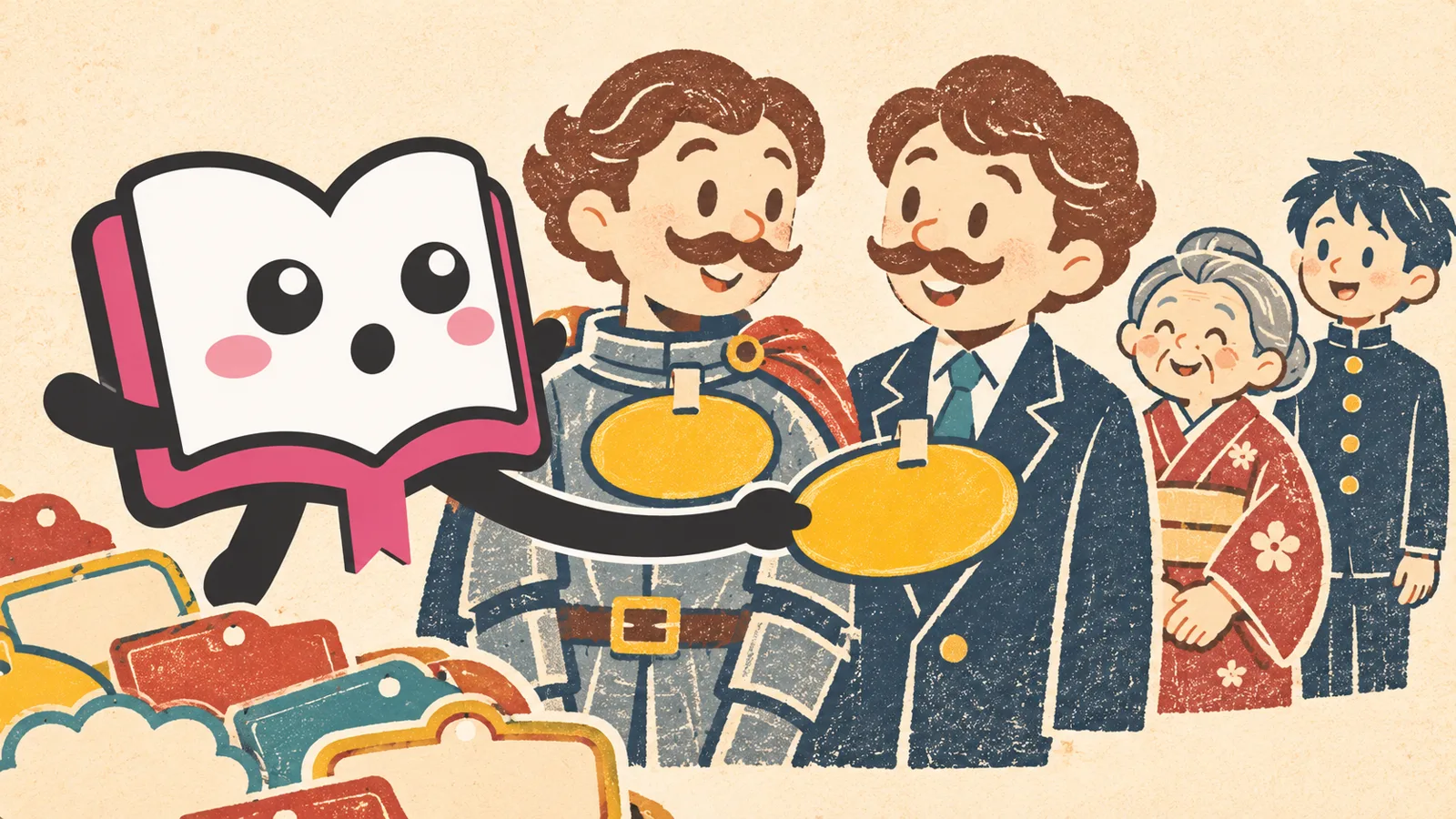
- A name passes if it is easy to say, does not blur with other characters, and fits the time and place
- List your main characters' names in a column and check that first sounds, last sounds and lengths don't overlap
- If a name can be read more than one way, show how it is said the first time it appears
- Subtract the character's age from the story's year to get a birth year, then look at names that were popular then
- Say candidates from AI or a name generator out loud and search the full name before you commit
A character's name passes if readers can say it without stumbling, never confuse it with another character's, and believe it fits the time and place the character was born. Among the candidates that clear those three tests, you can choose based on the sounds and kanji meanings you prefer.
This article explains how to name characters by working backward from the moments where names trip readers up. It also includes lists of the most common girls' and boys' names by era (from Japan), an example prompt for getting name ideas from AI, and a checklist of things to confirm before you decide.
Where do readers stumble over names?
Name problems are hard for the writer to see. You know every character's face, so you never mix them up even when their names are alike. The person who stumbles is someone reading the story for the first time. These are the four most common moments:
- Two characters with similar names appear, and the reader loses track of who is talking or acting
- The reader can't pronounce a name, or it has two possible readings, so they can't "say" it in their head
- The name doesn't fit the character's age or era, which pulls the reader out of the story
- The name matches a celebrity or someone the reader knows, and a different face comes to mind
All of these happen when each name is picked on its own, judged only by whether it's a "good name." A name should be chosen alongside the other characters' names and in light of the character's background. Below, we go through how to fix each of the four. After the section on eras, we also cover foreign-sounding and fantasy names.
How to name characters so they don't blur together: vary first sounds and length
When people read fast, they tell names apart not letter by letter but by the first sound and the rough length. Japanese names such as Yuki and Yuto, or Misaki and Miki, start the same way and are about the same length, so they blur when read quickly. Names that share the same ending (-ki, -ta, -ko) also look alike.
The check is simple: write your main characters' names in a column and look at whether the first sounds overlap and whether the lengths and endings are too similar. If your protagonist is Yuki, make the best friend Go and the love interest Kanae, so the first sounds and lengths are all different.
Making names similar on purpose is a different matter. If the plot hinges on two people being mistaken for each other because of their names, as with twins, the similarity has a job to do. In that case, decide in advance how the narration will tell them apart (for example, the older sister by her family name and the younger by her first name) so readers don't get lost.
Names that are hard to read or can be read two ways: show the pronunciation first
If readers can't pronounce a name, they can't say it in their head, and it's harder to get into the scene. Watch out not only for difficult spellings but also for names that can be read several ways. In Japan this is common, because the same kanji can be read differently. In Meiji Yasuda Life Insurance's survey of names by birth year, the girls' name ranked 2nd for babies born in 2025 was pronounced Himari for 27 children and Hinata for 6. The name ranked 6th splits three ways: Hina, Haruna and Hinata. So two children whose names are written with different kanji can both end up being called Hinata.
In Japanese novels, the surest fix is to add furigana (small reading guides printed beside the kanji) the first time the name appears. Where you can't add a reading guide, you can have another character say the name so readers hear it ("Himari, we'll be late!"). Also write the pronunciation in your character notes so you don't get confused yourself while writing.
If your story is set in present-day Japan and you want names that real people might plausibly have, Japan's actual naming rules are a useful guide. Japan's Family Register Act says a child's name must use "characters in common, everyday use." The Ordinance for Enforcement of the Family Register Act defines these as the kanji in the Joyo Kanji list (the official list of kanji for general use), the kanji in the ordinance's appended table (kanji approved for names), and katakana and hiragana (excluding archaic variant kana). In addition, under an amendment that took effect on May 26, 2025, the phonetic reading of a person's name is now recorded in the family register, and that reading must be "generally accepted as a reading of the characters used in names." In a story set in present-day Japan, names that use symbols or kanji not allowed in names can look out of place. For fantasy or stories set in the future, you don't need to follow these rules.
Pick names that fit the era and age (lists of girls' and boys' names)
Names carry the feel of the year someone was born. If a character born in the early Showa era (the late 1920s) is named Himari, Japanese readers will notice. First, subtract the character's age from the year the story takes place to get a birth year, then look at names that were common around then. For example, a 40-year-old character in a story set in 2026 was born around 1986.
The table below takes the 1st- and 2nd-place names from roughly every 10 years of the same Meiji Yasuda survey in Japan. The survey is based on the company's insurance policy data and does not count every child born that year. Even so, it's a good guide to how names changed over time.
| Birth year | Girls | Boys |
|---|---|---|
| 1925 | Sachiko, Fumiko | Kiyoshi, Shigeru |
| 1955 | Yoko, Keiko | Takashi, Makoto |
| 1975 | Kumiko, Yuko | Makoto, Daisuke |
| 1985 | Ai, Mai | Daisuke, Takuya |
| 1995 | Misaki, Ai | Takuya, Kenta |
| 2005 | Hina, Sakura | Sho, Hiroto |
| 2015 | Aoi, Hina | Hiroto, Yuma |
| 2025 | Sui (or Midori), Himari | Minato, Iori |
In 1955, every girls' name in the top 10 ended in "-ko," but by 1985 only one did: Yuko, in 10th place. The 2025 No. 1 girls' name, Sui (also read Midori), topped the survey's tables for the first time that year. Boys' names also shifted, from Kiyoshi and Shigeru to Daisuke and Takuya, and then to Hiroto and Minato. In a story with three generations, such as grandmother, mother and daughter, just picking one name for each generation from the table lets the names show the generation gap.
Family names matter more in stories set at a company or school. Adults often call each other by family name, so in a workplace story, check that the family names are easy to tell apart before worrying about first names. On the other hand, the moment one character switches from someone's family name to their first name can signal that the two have grown closer.
Foreign-sounding and fantasy names: give each country its own sound
Names for an invented country can be anything, which is exactly why they tend to end up all over the place. Names of people from the same country hold together when you set one sound rule and stick to it. If you decide, say, that "people from the northern country have short names with voiced consonants, and people from the southern country have long names ending in vowels," readers can tell where someone is from just by their name. If you base names on a real language, the world feels more consistent when you don't mix several source languages within one country.
If you want the story to be read in other languages, watch out for names that differ only in their written characters. In Japanese, two different names written with different kanji can both be read Hina; in romaji they are both just "Hina," so the translated version ends up with two characters with the same name. On Original Novel, you can create stories in any of 12 languages. If the names can be told apart by sound, characters won't blur together in any language.
Names shared with real people, and real names of people you know
If a name is common, someone somewhere will have it; that can't be avoided. What to watch out for is the full name of a famous person and the real name of someone you know who inspired the character. The first makes readers picture a different face; the second risks identifying that person when the story is published. Once you've settled on a candidate, search the full name once to check it doesn't match a famous person or a character in another work in the same genre.
Even for a story starring your family or friends, it's safer to give them story names if you'll post it online. Stories created on Original Novel are published too, and anyone can read them.
Using a name generator or AI for character name ideas
When you're stuck, you can try a "name generator" site that suggests names automatically, or an AI such as ChatGPT or Claude. A name generator gives you lots of candidates at the push of a button, which is great for browsing sounds. But most of them don't consider how a name sits alongside your other characters.
If you ask an AI, giving it all of the conditions above at once makes it more likely to suggest names you can use as is. Replace the [ ] parts and use it.
Suggest 10 name ideas for a character in my novel.

[Character] Role: [ ] (e.g., the protagonist's older sister) / Personality: [ ]
[Birth year and place] Around [ ], [ ] (e.g., around 1986, a small port town)
[Story's era and setting] [ ]
[Names already used] [ ], [ ], [ ]
[Conditions]
- First and last sounds must not overlap with the existing characters' names
- Must feel natural for someone born around that year
- Spelling must have only one obvious pronunciation
- Avoid full names of famous people
[Format] A table with: name / pronunciation / reason for choosing it (1 line)
Don't decide on a suggestion straight away; say it out loud first. Having a character call it in dialogue ("[name], come here a sec") reveals names that are awkward to say or that feel different without an honorific. AI can't fully check whether a name matches a real person, so do the final search yourself. Check how to use name generators and AI tools, and their rules, in each one's official guidance.
Keep the names consistent to the last chapter
Even after you decide, names drift as you write: the spelling changes partway through, or a nickname varies from scene to scene. You can prevent this by writing one line per character in your notes (the name, how it's pronounced, and who calls them what) and checking it each time you write a chapter.
On Original Novel, before each chapter is published, AI checks it for contradictions with earlier chapters and for mistakes in names and numbers. Each chapter's relationship chart also lists the characters' names and how they're connected, so you can look back when you think "wait, who was this again?" Reading stories while paying attention to how characters address each other is good practice too.
Read with an eye on how characters address each other
See more: Read with an eye on how characters address each other ›These stories were written by AI on this site. Watch how the way characters address each other changes.
 The Only Voice I Can't HearFor teens · Showbiz & idolsCompletedMay We Begin With a Lie?For adults · RomanceThe Jingjok Behind the BlackboardFor kids · School
What to check before you decide on a name
Once you have candidates, line up the main characters' names and check these six points:
- The first sound doesn't overlap with other main characters' names
- Lengths and endings aren't too similar
- Readers learn the pronunciation the first time the name appears (through a reading guide or another character saying it)
- It fits the birth year and the place the character grew up
- The full name doesn't match a famous person or someone you know
- It isn't awkward to say out loud
If a name passes all six, pick whichever sound and spelling you like. If you're stuck between two, imagine how the character's parents felt on the day they named them; that usually narrows it down.
Sources (date checked)
- Survey outlineMeiji Yasuda Life Insurance Company / Japanese / Checked Nov 18, 2026
- Readings of the top-10 namesMeiji Yasuda Life Insurance Company / Japanese / Checked Nov 18, 2026
- Top-10 names by birth year (girls)Meiji Yasuda Life Insurance Company / Japanese / Checked Nov 18, 2026
- Top-10 names by birth year (boys)Meiji Yasuda Life Insurance Company / Japanese / Checked Nov 18, 2026
- Family Register Acte-Gov Law Search (Digital Agency, Japan) / Japanese / Checked Nov 18, 2026
- Regulation for Enforcement of the Family Register Acte-Gov Law Search (Digital Agency, Japan) / Japanese / Checked Nov 18, 2026
- Kanji usable in a child's nameMinistry of Justice (Japan) / Japanese / Checked Nov 18, 2026
- Furigana will be recorded in the family registerMinistry of Justice (Japan) / Japanese / Checked Nov 18, 2026
FAQ
Can I give a character a very unusual or flashy name?
In fiction, yes. But if the story is set in present-day Japan, the name can feel out of place unless you also show how the people around the character react and how the character feels about it. If the name can be read more than one way, always show the pronunciation the first time it appears.
How long should the main character's name be?
There is no set length. What matters is that it isn't the same length as all the other main characters' names. A protagonist who appears constantly is easier to handle with a short name that's easy to say, or one short nickname, which keeps dialogue light.
Do I need to give characters a family name?
If everyone calls each other by first names, you can leave family names out. In stories set at a company or school, where many characters are called by their family names, check that the family names are easy to tell apart too. It's a good idea to note family names in your character notes anyway, in case a scene needs one later.
Can I change a character's name after I've started writing?
Yes. After a find-and-replace, also search for the forms the name takes elsewhere, such as nicknames, the name used without an honorific, or just the family name, and fix those. If the story is already published, a short note explaining the change helps readers avoid confusion.
Can I use a name from a name generator as is?
Check that service's terms of use to see whether you can. Even if you can, check for yourself that it fits alongside your other characters and the character's birth year, and search to make sure it isn't the full name of a famous person.