AI Story Continuation: How to Continue a Story with AI in 6 Steps, with a Prompt Template
The trick to AI story continuation is giving the AI what only you know: a short summary, the facts that must not change, and one clear direction for what happens next. This guide walks through six steps, a prompt you can copy, and the mistakes we see most often.
Key takeaways
- Give the AI three things first: a 3–5 line summary, the facts that must not change, and one direction for what happens next
- Paste the last scene word for word so the AI matches your style, then ask for one chapter at a time
- Fix one specific thing per request instead of asking it to "make it better"
- Unsure where to go? Ask for two versions and keep the one that fits
Why AI story continuations go wrong
Ask an AI to "continue this story" and you usually get one of three things: a chapter that forgets a character's name, a sudden twist that ignores everything before it, or a polite summary that wraps the whole plot up in a page. The AI doesn't know what you know about your story, so it guesses.
A good continuation needs three inputs that only you can give: what has happened so far, what must stay true, and where the story should go next. Give the AI those three, and the writing itself is the part it does well.
So far
- A 3–5 line summary
- The last scene, word for word
Must stay true
- Names and nicknames
- Ages, places, and rules of the world
- Who knows which secret
Next
- What should happen
- Length of the chapter
- How it should end
How to continue a story with AI in 6 steps
- 1Summarize the story so far in 3–5 lines
- 2List the facts that must not change
- 3Pick what should happen next
- 4Set the length and the chapter ending
- 5Paste the last scene and ask for one chapter
- 6Check continuity, then fix one thing at a time
1. Summarize the story so far
Three to five lines is enough: who the main character is, what they want, and what just happened. Long summaries backfire, because the AI starts treating minor details as plot points it has to resolve.
2. List the facts that must not change
Write down names (and what characters call each other), ages, places, and any rules of the world, such as "magic only works at night" or "nobody knows Lena is the heir." This list is the single most effective fix for continuity errors. Keep it, and paste it into every new chapter request.
3. Pick what should happen next
Choose one direction, not five. "They find the missing letter, but it's addressed to someone else" gives the AI a clear target. If you can't decide, that's fine; see writing two versions below.
4. Set the length and the chapter ending
Give a number ("about 1,500 words") and say how the chapter should end: on a cliffhanger, a quiet moment, or a decision. Without this, many AIs drift toward a neat ending that closes the story too early.
5. Paste the last scene and ask for one chapter
The summary tells the AI what happened; the last scene shows it how your story sounds: sentence length, tense, and point of view. Paste the final few paragraphs word for word, then ask for a single chapter. One at a time is easier to check than five at once.
6. Check continuity, then fix one thing at a time
Read it against your list from step 2. If something is off, name the exact spot and the change: "In the scene at the station, she should not know about the letter yet." Vague requests like "make it better" make the AI rewrite everything, including the parts you liked.
A copy-and-paste prompt for story continuation
Replace the brackets with your own details. The order follows the six steps above.
You are continuing a story written by someone else. Keep their style.

[STORY SO FAR] 3–5 lines: who, what they want, what just happened
[FACTS THAT MUST NOT CHANGE] names and nicknames, ages, places, world rules, who knows which secret
[WHAT HAPPENS NEXT] one direction, e.g. "they find the letter, but it's addressed to someone else"
[LENGTH] about 1,500 words, one chapter only
[ENDING] cliffhanger / quiet moment / a decision
[DON'T] no real people or brands, don't resolve the main mystery yet

[LAST SCENE] paste the last 3–5 paragraphs here, word for word

Write the next chapter. Match the point of view and tense of the last scene.
Can't decide what happens next? Write two versions
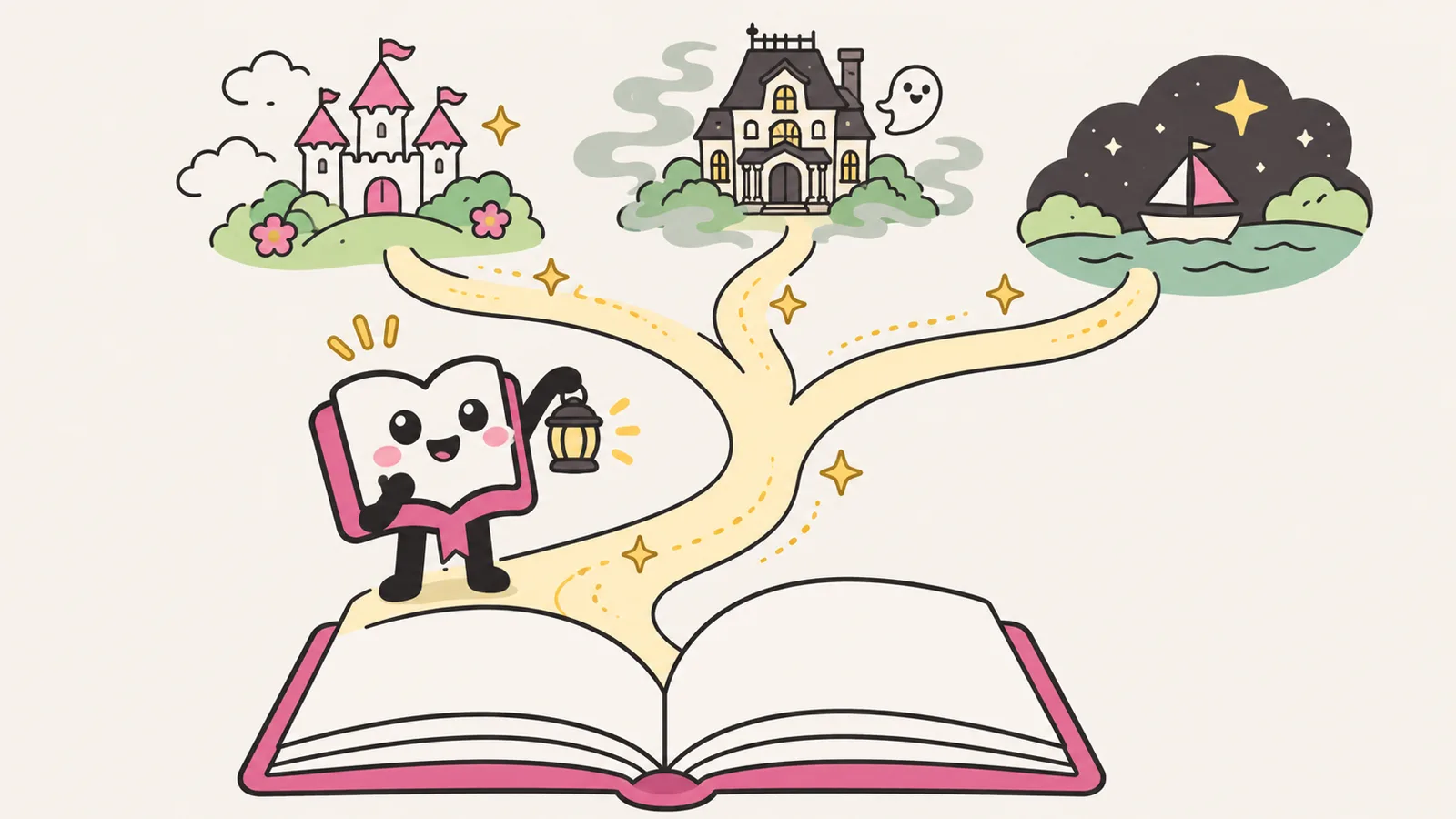
Instead of rewriting one chapter again and again, ask for two short continuations that go in different directions: "Version A: she opens the letter. Version B: she burns it unread." Reading them side by side tells you quickly which one belongs to your story, and the one you don't use often becomes a good idea for later.
a letter arrives
She opens it
She burns it unread
Something else
This is the idea Original Novel is built around. At the end of a chapter in an ongoing story, you can pick what you'd like to happen next and get a new chapter. If you don't like where it went, branch off from the same chapter in a different direction. The original story stays as it was, so you can go back and compare.
Continue a story with AI
- Summarize the story so far3–5 lines: who, what they want, what just happened
- List the facts that must not changeNames, ages, places, rules of the world
- Pick what should happen nextOne direction, not five
- Set the length and the endingAbout 1,500 words, end on a cliffhanger
- Paste the last scene, ask for one chapterIt matches your voice and point of view
- Check continuity, fix one thing at a timeName the exact spot and the change
Common mistakes (and quick fixes)
When we went through 22 story requests sent to Original Novel in its first days (November 2026), most problems started with the request, not the writing. The sample is small, so treat these as patterns rather than statistics.
| Mistake | What happens | Quick fix |
|---|---|---|
| Instructions that pull in opposite directions ("a tear-jerker, but light and cheerful") | The tone wobbles from scene to scene | Pick the one thing that matters most and write "if in doubt, prioritize X" |
| Several big twists packed into one short chapter | Each twist feels rushed and unearned | One twist per chapter. Add chapters if you want more |
| Writing your wish for the ending as the character's goal ("I want them to get married") | The character starts chasing the wrong thing | Keep the character's goal and your preferred ending as separate lines |
| Covering years of story in one or two chapters | It reads like a summary, not a story | Shorten the time span or add chapters |
| Asking it to write "in the style of" a specific book | Phrases can come out too close to the original | Describe the mood instead: "quiet, rainy, slow-burning" |
Which tool should you use?
There's no single best tool. It depends on how much of the writing you want to do yourself. Check each service's own pages for current prices and limits, since they change often.
| Type | Examples | Best for | Watch out for |
|---|---|---|---|
| General AI chat assistants | ChatGPT, Claude, Gemini | Writers who want full control over the prompt and every revision | Long chats can lose early details, so paste your fact list every time |
| Writing-focused tools | Sudowrite, NovelAI, and similar | Drafting inside a dedicated writing app, from a paragraph to a full chapter | Takes some practice to steer |
| Pick-and-continue story sites | Original Novel and similar | Reading a ready-made chapter first, then choosing what happens next | Less control over exact wording |
Can you continue someone else's story?
Continuing a story for yourself is different from publishing it. Pasting a published novel into an AI and posting the "next chapter" can infringe the original author's rights, and many fan fiction communities have their own rules about AI-written text. The safer stories to continue are your own, works in the public domain, and stories on platforms that invite continuations, such as Original Novel (finished stories there are closed to new chapters).
On the question of who owns AI-assisted writing, the U.S. Copyright Office concluded in January 2025 that AI output can be protected only where a human author has determined sufficient expressive elements — for example, where human-written material is perceptible in the output, or where a person creatively arranges or modifies it — but not through the mere provision of prompts. Rules differ by country, and individual cases are decided on their facts.
Read a few AI-continued stories first
If you've never seen a long AI-written story, reading one is the quickest way to see where AI shines and where a human needs to steer. Original Novel (original-novel.com) launched in November 2026 as a place where readers choose where stories go next.
AI-written stories to read
See more: AI-written stories to read ›AI-written stories on Original Novel, most-read first. Ongoing stories can be continued; finished ones are read-only.
Summary
To continue a story with AI, give it what only you know (a short summary, the facts that must not change, and one clear direction), then ask for a single chapter and fix one thing at a time. When you're unsure where the story should go, write two versions and keep the one that fits.
Sources (date checked)
- Chapter 1 - Circular 92U.S. Copyright Office / Checked Nov 18, 2026
- Copyright Office Releases Part 2 of Artificial Intelligence Report (NewsNet Issue 1060)U.S. Copyright Office / Checked Nov 18, 2026
FAQ
Can AI continue a story I already started?
Yes. Paste a short summary, a list of facts that must not change, and the last few paragraphs of your story, then ask for one chapter. The last scene helps the AI match your point of view, tense, and tone.
Why does the AI forget names and details in long stories?
AI assistants can lose track of details from early in a long conversation. Keep a short list of names, ages, places, and world rules, and paste it into every new chapter request instead of relying on the chat history.
What is the best prompt for story continuation?
One that states what happened so far, what must stay true, what should happen next, how long the chapter should be and how it should end, followed by the last scene word for word. The template in this article follows that order.
Is it okay to continue someone else's story with AI?
Writing a continuation for yourself is different from publishing it. Publishing a continuation of someone else's published work can infringe their rights. Your own stories, public domain works, and platforms that invite continuations are the safer choices.
Who owns a story continued with AI?
In the United States, the Copyright Office said in January 2025 that AI output can be protected only where a human author determined sufficient expressive elements, such as human-written material that is perceptible in the result, or creative arrangement or modification, but not through prompts alone. Rules differ by country.