How to Make Stories with a Free AI Story Generator: Tools You Can Try Without Signing Up, How to Ask, and What to Watch For
The trick to getting a good story out of a free AI story generator: pick a tool that fits your goal, check sign-up, limits, age rules and how your input is used on the official pages, then decide four things before you ask: genre, main character, ending and length. We checked the free tiers of the main services on their official pages on November 11, 2026 and put them in a table, along with 6 steps and a prompt template you can use as is.
Key takeaways
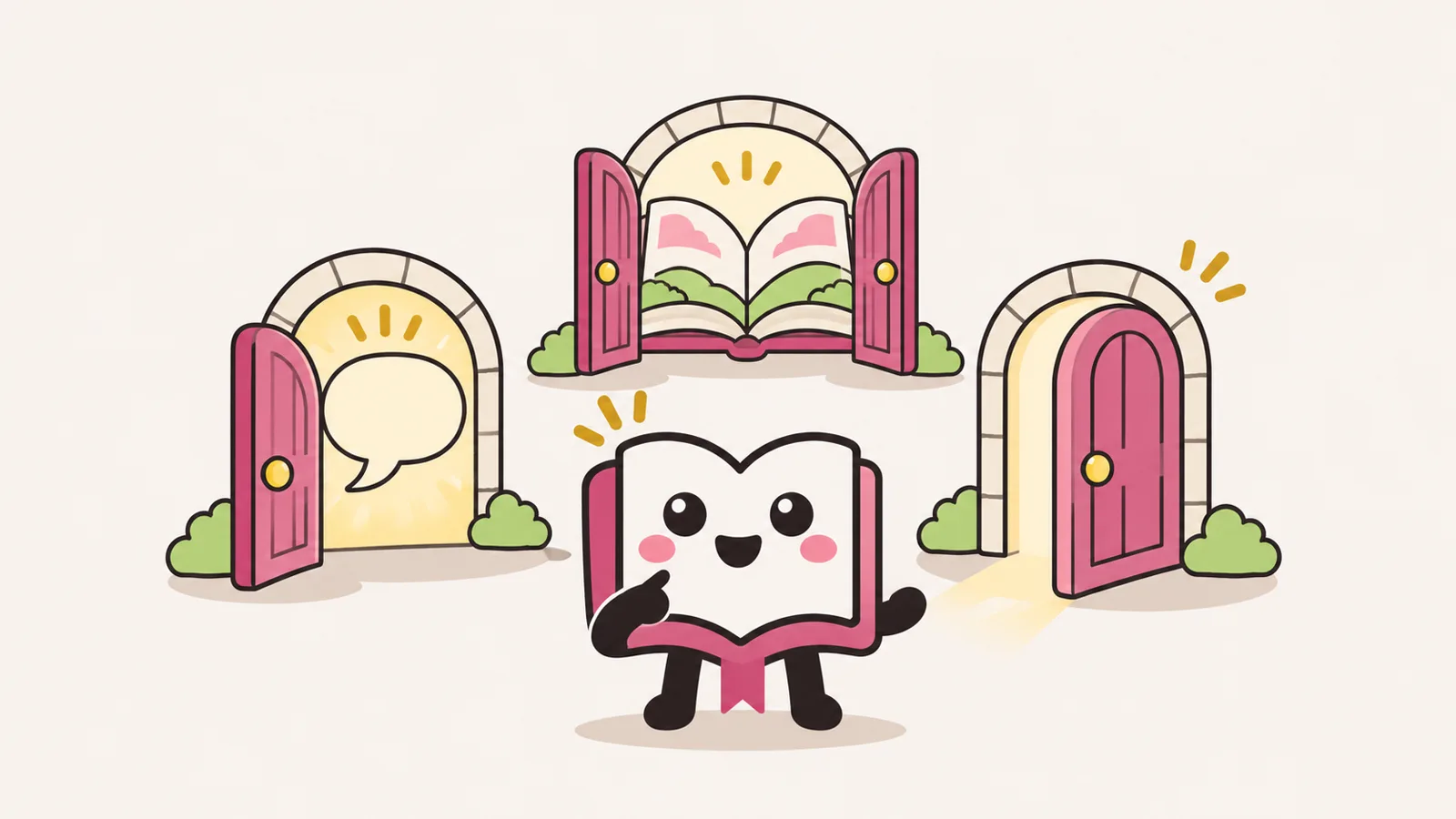
- Free tools for making stories come in 3 types: chat AIs you talk to, story sites where you pick options, and fiction-writing tools. Whether you can use one without signing up depends on the tool
- Before you start, check 4 things on the official pages: whether sign-up is needed, the free limits, the age rules, and how your input is used
- Decide the genre, main character, ending and length, have the AI write Chapter 1 only, then ask for fixes one at a time (6 steps)
- Leave out real names and school names. Kids should use an adult's account, together with an adult. Check rights against the terms and the view of Japan's Agency for Cultural Affairs
How do you make a story with AI for free? The short answer
The fastest way to make a story with AI for free is to choose the type of tool by what you want to do, then decide four things (genre, main character, ending and length) before you ask. As of November 2026, chat AIs you talk to (ChatGPT, Gemini, Claude and others) all have a free tier, and some pick-and-make story sites and fiction-writing tools can also be tried for free.
But what "free" means differs from service to service. Do you need to sign up? How much can you use? From what age? Is what you type used to improve the AI? Check these four points in the official information first, and you won't get stuck halfway through.
Chat AIs you talk to
- Ask for anything you like
- Revise as you write on
- The free tier has limits
Pick-and-make story sites
- Just pick a genre and a main character
- Some add illustrations
- Hard to request exact wording
Fiction-writing tools
- Continue your own opening
- Some let you choose a style
- Takes practice to steer well
Whether you can use a tool without signing up depends on the tool, not the type. Compare the columns in the table below.
Free AI story generators compared: free limits and sign-up
The table below is based on each company's official pages (pricing, help and terms of use), checked on November 11, 2026. Rules can change, so look at the official information again before you start.
| Service | What you get for free | Usable without signing up? | Age rules | How your input is handled |
|---|---|---|---|---|
| ChatGPT | Free plan available. The pricing page lists text chat as "unlimited" (with safeguards against abuse). Image creation and some other features have limits | In supported countries, you can use it before creating an account. Only one conversation at a time, and it is not saved. Depending on your location or network, you may be asked to log in | 13 or older (or the minimum age in your country, if higher). Users under 18 need permission from a parent or guardian | Whether it is used for training depends on your region and settings. You can turn it off under "Data Controls" in Settings (even without logging in, per browser) |
| Gemini | Usable without a paid plan. Usage has limits that reset every 5 hours until you reach the weekly limit | Depending on your region and device, some features work without signing in. The Android app and some features require signing in | Parents can turn off use for children under 13 in Family Link (Google's parental controls) | Human reviewers may read some of it, and Google advises not to enter confidential information you wouldn't want seen. If you turn off "Keep Activity", later chats are not used to improve the AI (except when you send feedback) |
| Claude | Free plan available. Usage has limits (every 5 hours and weekly) | Check the official site | 18 or older (or the age required in your region, if higher) | May be used for training; you can opt out in your account settings (exceptions include chats you sent feedback on) |
| Fiction-writing tools (e.g. AI Novelist, a Japanese service) | Check the official site for free limits and whether sign-up is needed | Check each service's terms | ||
| Pick-and-make story sites (e.g. Original Novel) | Original Novel lets you create up to an illustrated Chapter 1 | Original Novel lets you create without signing up, as of November 2026 | Check each site's information | |
For a picture-book-style story, there is also Gemini's "Storybook". It makes an illustrated book (usually 10 to 12 pages) and works without a paid plan, but you need to sign in, and for now it isn't available to users under 18.
Which should you pick? Choose by what you want to do
Pick a tool not by "which is best" but by how much of the writing you want to shape yourself. A chat AI is like a restaurant where you can order anything; a pick-and-make site is like a set menu.
Pick-and-make story site
Chat AI you talk to
Fiction-writing tool
- Writing prompts (instructions for the AI) feels like a chore: Start with a site where you just pick options to get a feel for what AI can write, then move on to a chat AI. You're less likely to get stuck.
- You want to make stories in a phone app: According to their official pricing pages, ChatGPT works on the web, iOS and Android, and Claude on the web, desktop and mobile. Gemini also works on phones, but the Android app requires you to sign in.
6 steps to make a story with AI for free
The steps come in three stages: Decide, Create and Check. Skip steps 1 to 3, and you tend to use up your free tries on rewrites.
- 1Decide what you want to do (read, illustrated, write it yourself)
- 2Pick a tool and check sign-up, limits, age rules and how your input is used
- 3Decide the genre, main character, ending and length
- 4Have it write Chapter 1 only
- 5Ask for one fix at a time, then add the next part
- 6Before saving or sharing, check what you entered and the rights
1. Decide what you want to do
Do you just want to read, do you want illustrations, or do you want to turn your own ideas into a story? Once your goal is clear, Figure 2 tells you the type.
2. Pick a tool and check sign-up, limits, age rules and how your input is used
In the official information, check whether you need to sign up, how much you can use for free, the age rules, and whether what you type is used to improve the AI. If it isn't a good fit, you can switch before you start writing.
3. Decide the genre, main character, ending and length
These four are the frame of your story. Give your main character one line they often say, and the AI will find it easier to keep their voice consistent. For the ending, pick one, such as "happy ending", "bittersweet goodbye" or "twist ending". Give the length as a number, like "one chapter of about 1,000 words".
4. Have it write Chapter 1 only
Checking one chapter at a time helps you spot drift early and cuts down on rewrites. With a chat AI, you can use this template as is.
You are a storyteller. Write Chapter 1 of a short story using the settings below.

[Genre] e.g. fantasy / romance / mystery / cozy
[Main character] Name (made up) / age / personality. Catchphrase: "___"
[Setting] Era, place, season
[Type of ending] Pick one: happy ending / bittersweet goodbye / twist ending
[Length] About 1,000 words. Chapter 1 of 3
[Most important request] When in doubt, put ___ first
[Do not include] Names of real people or works, scenes that are too scary
[Finally] End the chapter so readers want to read the next one
5. Ask for one fix at a time, then add the next part
"Make it more interesting" tends to just shift the whole thing a little. Say where and how to change it, one thing at a time, like "Shorten the last conversation" or "Make the crying scene one where she holds back her tears". From Chapter 2 on, paste "the story so far (3 lines)" and "the rules for names and settings" first, then ask for the next part. The story will stay on track better.
6. Before saving or sharing, check what you entered and the rights
If you post it online or give it to others, read the 4 cautions in the next section.
Free AI stories in 6 steps
- Decide what you wantRead, illustrate, write? Your goal picks the tool
- Pick a tool, check the rulesSign-up, limits, age, how input is used
- Set the 4-part frameGenre, main character, ending, length
- Get Chapter 1 firstOne chapter at a time means fewer rewrites
- Fix one thing, then add moreSay where and how, one thing at a time
- Check before saving or sharingNo real or school names Check rights in terms
How to ask well: what we learned from real requests
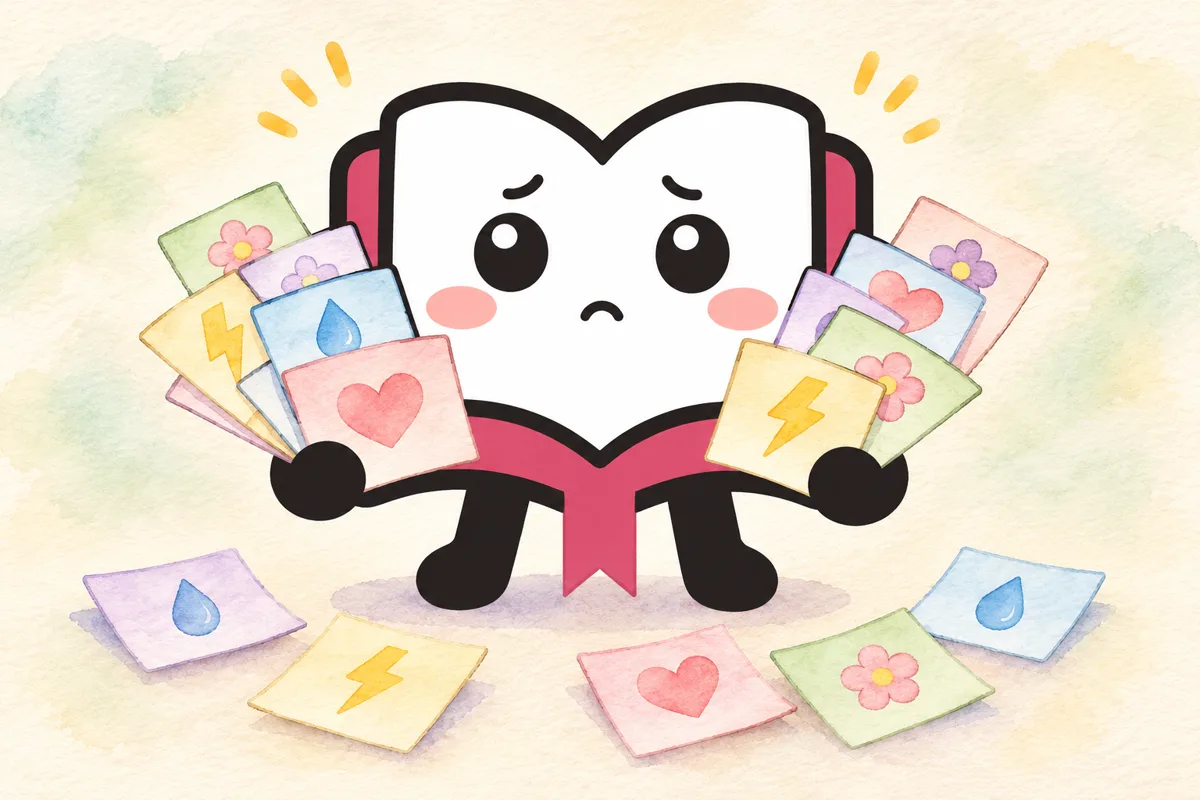
We went back over story requests sent to Original Novel (22 requests from 11 people, November 6 to 7, 2026). The most common wishes were "the thrill of falling in love" and "a twist", 8 each, and "a story to cry my heart out" with 6. And when things didn't go well, the cause was less the AI's skill than requests that contradicted each other. There were 7 such cases: 4 where the chosen options clashed, and 3 that asked for a twist in a "one-chapter, complete" story. The numbers are still small, so treat this as a rough trend.
| Requests that tend not to work | What tends to happen | Ask like this instead |
|---|---|---|
| Requests that clash, such as "no romantic scenes" in a love story, or "cozy" with a tearjerker ending | The AI can't tell which to put first, and the mood comes out mismatched | Pick the one request that matters most and write "When in doubt, put ___ first" |
| Asking for twist after twist in a story short enough to end in one chapter | Too much is crammed in, and every twist ends up shallow | One twist at most in a short story. If you want more, add chapters |
| Naming a real work and asking for "this kind of mood" | The result may be too close to the original work | Describe the mood in words instead of naming the work, like "quiet, as if you can hear the rain" |
You can avoid all of these by deciding which request comes first in step 3.
4 things to watch out for with free AI story generators
1. Limits on uses and amount
Free tiers usually have limits (see the second column of the table). If you make a long story in one go, you're likely to hit the limit partway through, so make one chapter at a time and copy the parts you like somewhere safe.
2. How your input is handled
What you type may be used to improve (train) the AI. ChatGPT, Claude and Gemini all explain how to opt out in their settings (see the right-hand column of the table). As a rule, don't put real names, addresses, school names or contact details into your story material. Give your characters made-up names.
3. When kids use it
Under each company's terms as of November 11, 2026, ChatGPT requires users to be 13 or older (users under 18 need permission from a parent or guardian), and Claude requires users to be 18 or older. With Gemini, parents can turn off use for children under 13 in Family Link (Google's parental controls), and Storybook isn't available to users under 18 for now. When using AI with kids, have an adult operate it on an adult's account, and let the child help decide what the story is about. Don't enter the child's real name or photos.
4. Rights to the story you make
Under their terms of use, ChatGPT (OpenAI), to the extent permitted by applicable law, and Claude (Anthropic), on condition that you comply with its terms, say that if the company has any rights in the text the AI produces (the output), it assigns them to the user. But this is an agreement between the company and the user. Whether the story is protected by copyright at all is a separate question.
In Japan, the Agency for Cultural Affairs' paper on AI and copyright (March 2024, in Japanese) takes the view that when the instructions to the AI stay at the level of ideas and don't reach the level of expression, what the AI produces is not considered a work protected by copyright. On the other hand, it says detailed instructions that specify the expression are thought to make it more likely that human creative contribution is recognized, and that when someone checks the output and repeatedly revises the instructions through trial and error, the result could also be recognized as a copyrighted work. Parts that a person has creatively worked on are usually considered copyrighted. However, this view isn't legally binding, and it is decided work by work. Also avoid pasting text from a real published work and asking the AI to continue it.
Start by reading
Before you make your own, reading a few stories written by AI gives you a sense of "how much you can leave to it". Original Novel (original-novel.com) launched in November 2026 as a fiction site where you can make and read stories with AI. In ongoing stories, our goal is to let readers choose "what happens next" from any chapter they like.
Read stories written by AI
See more: Read stories written by AI ›Stories written by AI on this site, most-read first.
Summary
To make a story with a free AI story generator, start by picking a tool that fits your goal and checking sign-up, limits, age rules and how your input is used on the official pages. Then decide four things (genre, main character, ending and length), have it write Chapter 1 only, and ask for fixes one at a time. The trick is to keep your requests few and your priorities clear.
Sources (date checked)
- The ChatGPT home pageOpenAI Help Center / Checked Nov 18, 2026
- Gemini app usage limits and upgrades by Google AI subscription planGoogle (Gemini Apps Help) / Japanese / Checked Nov 18, 2026
- Plans and pricingAnthropic (Claude) / Japanese / Checked Nov 18, 2026
- Terms of UseOpenAI / Japanese / Checked Nov 18, 2026
- Consumer Terms of ServiceAnthropic / Checked Nov 18, 2026
- Gemini Apps Privacy HubGoogle (Gemini Apps Help) / Japanese / Checked Nov 18, 2026
- Create an illustrated storybook in the Gemini appGoogle (Gemini Apps Help) / Japanese / Checked Nov 18, 2026
- The Approach to AI and CopyrightAgency for Cultural Affairs (Japan) / Japanese / Checked Nov 18, 2026
FAQ
Can I make stories with AI for free?
Yes. As of November 2026, ChatGPT, Gemini and Claude all have a free tier, and some pick-and-make story sites and fiction-writing tools can also be tried for free. However, there are limits on how much you can use and which features you get, and they differ from service to service. Check the official information before you start.
Is there a free AI story generator with no sign-up?
Yes. In supported countries, ChatGPT can be used before you create an account, and depending on your region and device, Gemini lets you use some features without signing in (checked in each company's official help on November 11, 2026). Using them without an account comes with limits, such as conversations not being saved. Some pick-and-make story sites, like Original Novel, also let you create without signing up (as of November 2026).
Can I make stories with AI in a phone app?
Yes. According to their official pricing pages, ChatGPT is available on the web, iOS and Android, and Claude on the web, desktop and mobile. Gemini also has a phone app, but the Android app requires you to sign in.
Is it OK for kids to make stories with AI?
Check the age rules first. Under each company's terms as of November 11, 2026, ChatGPT requires users to be 13 or older (users under 18 need permission from a parent or guardian), and Claude requires users to be 18 or older. If you use it with a child, the safest way is for an adult to operate it on an adult's account, without entering the child's real name or photos.
Who owns the copyright to a story made with AI?
Under their terms of use, ChatGPT and Claude say that if the company has any rights in the output, it assigns them to the user. Whether copyright exists at all is a separate question. In Japan, the Agency for Cultural Affairs' paper on AI and copyright (March 2024, in Japanese) takes the view that when the instructions to the AI stay at the level of ideas, what the AI produces is not considered a copyrighted work, while parts that a person has creatively worked on are usually considered copyrighted. It is decided work by work.